Inside The New Gothic: “The Death Bell”

The Gothic is the most enduring literary tradition in history but in recent years friendly ghosts and vegetarian vampires threaten its foundations. The New Gothic is a collection of short stories which revisits to the core archetypes of the Gothic, the rambling, secret-filled building, the stranger seeking answers, the black-hearted tyrant, and reminds us not to embrace but to fear the darkness.

‘The Death Bell’ by Laura Ellen Joyce involves two connected stories, beautifully told, one tale of a woman visited by her nephew, one tale of a couple on a first date. The gradual build-up to the shocking denouement is deliciously torturous.


This is good. Sarah said, genuinely impressed by the blood pudding; she loved the way that the black fat had cracked under the grill and oozed just a little. The delicate shards of bonemeal that gave it grit.

You’re such a carnivore Sarah, Ryan teased, flirted maybe. She let him, it wasn’t bad, this menu. He wasn’t such a sap after all.

Save some room for dessert, the waitress, who was constantly at their table, said. It’s a little bit special. She poured miniscule amounts of wine into their green tumblers, water into the blue ones. Sarah giggled. It was all so childish and pleasurable, she just let herself relax.

It really is special, the dessert. They put gold in it.

Gold? Sarah asked. It seemed ridiculous to her, such a city boy idea. Gold.

Doesn’t it taste like shit though? She teased. His face changed. She continued. It’s a great idea though, symbolic…

Sarah refilled both their wine glasses and when she placed the bottle back in the ice bucket, she brushed Ryan’s hand with her fingertips.

*

Grainne had been four when her grandmother had got the sickness. Four when she first heard the death bell. Adam, her nephew, was three now. Her sister, Mary, had been surprised to hear from her, but glad to have a few days peace whilst Adam visited Grainne; she’d sounded exhausted. Grainne had never met the boy before. She had not approved of Mary’s defiant childbearing at forty-five. Her own phantom womb clenched, like a Venus flytrap, at the thought of it. The second time the death bell came, Grainne had been sixteen. There had been no baby in the end, just a slick of ruined tissue and a curdling violence inside her. She had had an operation to remove the cursed organs and she was glad; there was only herself and Mary now, and, of course, little Adam. Mary’s man had been a sperm bank. Sperm. Bank. She spoke the words. Such an ugly thing it sounded.

The rain was coming down now, a horrid June, not a time for guests. But she’d made her plans, and she had such little time

For the rest, get The New Gothic from Stone Skin Press.
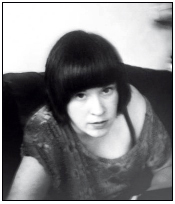

Laura Ellen Joyce’s first novel, The Museum of Atheism, was published by Salt in 2012. She has had short fiction and poetry published in Succour, Metazen, Paraxis, and Murmurations: An Anthology of Uncanny Stories about Birds. Her novella The Luminol Reels will be published by Calamari Press in 2014. Laura teaches Literature and Creative Writing at York St John University.
Posted in News Tagged with:

io9 Gives The New Gothic a Glowing Review

At io9, critic Ed Grabianowski has just given The New Gothic a wonderfully perceptive review. It reads, in part:

…What I can tell you is that editor Beth K. Lewis and the team at Stone Skin Press have selected a terrific set of stories. They hang together, despite disparate elements; each tale hints at the darkness lurking in urban neighborhoods, in old houses, on desolate roads, and in our hearts. Cue Vincent Price’s menacing laugh echoing down a black corridor. There are no castles here, but there’s no sympathy for the devil either.

Read the full review over at io9, and then grab The New Gothic from Stone Skin Press.

Posted in News Tagged with:

Meet the Schemers: Ekaterina Sedia

Schemers is the latest genre-crossing anthology of new short fiction from Stone Skin Press. From the classic myths to the pages of the Bible, from Shakespeare’s stage to the yellowed pulps of yesteryear, literature runs red with tales of plotting and betrayal. Today we picture betrayals occurring not at feasts for kings or out in the gothic woods, but in CFC-lit cubicles, to the tap-tap-tap-tapping of desktop keyboards.

When it comes to classic treachery, you don’t come closer to the roots of the tradition than an assassin in a royal court. What distinguishes Ekaterina Sedia’s “Protector of Ascheli” is not only the smoky evocation of its fantasy setting, but its focus on the emotional consequences of betrayal.


The day of the funeral was a haze for me; not because of the feverish activities of the manor house inhabitants and Gesur’s anguish, but because I had to put the steel net over my head. It was the custom of the Protectors: on occasions such as this, we cease our eavesdropping on the thoughts of others, and become as blind as the rest, wrapped in the same grief as they, our senses extinguished by steel. Not that anyone would dare to plan treason on such a day, but the family showed their mourning by waiving protection, as if earthly cares did not exist for them anymore.

The main hall was prepared, and the body of the old lord, Gesur’s father, lay on the dais in the center of it, amidst the bowls of fruit and fragrant spices. The laity and the clergy, the merchants and the peasants, came through to pay their respects. I stood with the rest of the family, my face hidden by a black veil on Isera’s insistence. Gesur’s wife thought that the sight of me would be too unsettling for the unaccustomed. I let it slide, and peered at the crowd, only my own thoughts in my head for a change. I wondered if Taine would make an appearance.

I stole a glance at Gesur. He bore his devastation well, his young face expressing no weakness but only appropriate sorrow. His hands, stained black, hung by his sides: the family members were not supposed to touch anything the day of the burial, and the ground charcoal revealed any violation of this tradition.

For the rest, get Schemers from Stone Skin Press.


Ekaterina Sedia resides in the Pinelands of New Jersey. Her critically acclaimed novels, The Secret History of Moscow, The Alchemy of Stone, The House of Discarded Dreams and Heart of Iron were published by Prime Books. Her short stories have sold to Analog, Baen’s Universe, Subterranean and Clarkesworld, as well as numerous anthologies, including Haunted Legends and Magic in the Mirrorstone. She is also the editor of Paper Cities (World Fantasy Award winner), Running with the Pack, Bewere the Night, and Bloody Fabulous, as well as the forthcoming Mammoth Book of Victorian Romance . Visit her at www.ekaterinasedia.com.

Posted in News Tagged with:

Strange Happenings at Stone Skin Press

Enigmatic Icon here. There’s been a lot of remarkable excavations at the word quarries, and since we keep unearthing new specimens I’ll try to stop in a little more often to keep you all abreast. Here’s what we’ve turned up this month:


That’s all the news that’s fit to chisel in granite for now, but I’ll be back next month to give you another update. Have a gneiss week, everyone.
Posted in Uncategorized Tagged with: , ,

Inside The New Gothic: “The Debt Collector”

The Gothic is the most enduring literary tradition in history but in recent years friendly ghosts and vegetarian vampires threaten its foundations. The New Gothic is a collection of short stories which revisits to the core archetypes of the Gothic, the rambling, secret-filled building, the stranger seeking answers, the black-hearted tyrant, and reminds us not to embrace but to fear the darkness.

Subtle terror pervades the small town visited by the narrator of ‘The Debt Collector’ by Fi Michell. Although he quickly discovers there is a vampire in the village, the extent of the vampire’s influence makes for a disturbing revelation. The story is a slow burn with an atmosphere reminiscent of Susan Hill’s The Woman in Black.


Bored of watching the locals, I examined the dimly lit black-and- white photograph of a deer-hunting scene that hung on the wall above my table in the Wolf’s Head Tavern, the only decoration not scallop-shaped. Judging by the Art Deco style, this wing was newly built, doubtless thanks to the hamlet’s thriving tourist trade. The din of the pounding rain mingled with laughter and singing.

Cold wind parted the smoke haze. In the open doorway, a man in an old-fashioned hooded greatcoat bent over his wooden cane. By my wristwatch, precisely nine p.m., as we’d agreed. I stubbed out my cigarette and signalled.

The hood concealed his inspection, but I felt it nonetheless. The same joint-weakening predator’s scrutiny I’d learned to flee growing up in the Bryceter city slums. Not something I’d expected.

As he shuffled through the crowd, conversations paused. Several patrons nodded to him before returning to their beer. The proprietor signalled a waiter to take the coat, but the old man waved him away and leaned his cane against my table.

I stood, extending an open palm. “Mr. Devereaux, I am Marcus Slade. Thank you for coming. May I buy you a drink?”

“Mr. Slade.” His voice rasped; his grip was icy and surprisingly firm. “No, you may not.”

We sat, and he pushed back the hood, revealing a scalp as white as bone and sunken eyes set into bruises. If I’d not felt that gaze, he might still have been the elderly man I’d expected, so I looked for the spark deep within his pupils.

There it was. The faintest indigo flicker. My left hand clenched over old scars. A vampire, and only two feet of table between us.

For the rest, get The New Gothic from Stone Skin Press.


Fi Michell lives in Sydney, Australia. Her love of myth, fantasy, and science fiction was born during three years of cold, rainy days in Wellington, New Zealand, as a child. She has had careers in architecture and e-commerce, but now writes whenever her two children permit. Fi Michell may be found online at http://fimichell.wordpress.com.
Posted in Uncategorized Tagged with:

Meet the Schemers: Tania Hershman

Schemers is the latest genre-crossing anthology of new short fiction from Stone Skin Press. From the classic myths to the pages of the Bible, from Shakespeare’s stage to the yellowed pulps of yesteryear, literature runs red with tales of plotting and betrayal. Today we picture betrayals occurring not at feasts for kings or out in the gothic woods, but in CFC-lit cubicles, to the tap-tap-tap-tapping of desktop keyboards.

The narrator of Tania Hershman’s “The Plan or You Must Remember This” addresses us in our time’s default voice of deception, that of deliberately bland bureaucracy. Its reversed chronology gives us a puzzle to unlock, though perhaps not one as great as the easy suppression of conscience at the center of its driving social experiment.


10.

Look at the Memory Man run! There he goes! We knew he’d run. We didn’t know when exactly or in which direction, but we knew. Doors were left slightly ajar, locks not quite locked. Yes, we’re recording it, we’re videoing him. Of course we are, for later analysis—of his speed, direction, gait, the prevailing wind. Go, Memory Man, go! How will he remember this? We won’t be able to ask him, not this time. Look at him, you’ve got to be impressed with it all, at his age. His knees look quite stiff, oops, he’s stumbled. But Memory Man picks himself straight up, not even looking behind to see if we’re following. Of course we’re not following. That would defeat the purpose. He has to go. It’s his time to go now. Farewell, Memory Man, we’ll see you soon. We hope we’ve left you with… well, if not happy, then at least new. Memories. Ones you won’t. Well, you don’t, do you? Forget.

For the rest, get Schemers from Stone Skin Press.


Tania Hershman is the author of two story collections: My Mother Was an Upright Piano: Fictions (Tangent Books, 2012), a collection of fifty-six very short fictions, and The White Road and Other Stories (Salt, 2008; commended, 2009 Orange Award for New Writers). Tania’s short stories and poetry are published or forthcoming in, among others, Five Dials, The Stinging Fly, Tears in the Fence, PANK Magazine, SmokeLong Quarterly, The London Magazine, and New Scientist, and on BBC Radio. She is writer-in-residence in Bristol University’s Science Faculty and editor of The Short Review, the online journal spotlighting short story collections and their authors.

Posted in News Tagged with:

Inside The New Gothic: “Dive in Me”

The Gothic is the most enduring literary tradition in history but in recent years friendly ghosts and vegetarian vampires threaten its foundations. The New Gothic is a collection of short stories which revisits to the core archetypes of the Gothic, the rambling, secret-filled building, the stranger seeking answers, the black-hearted tyrant, and reminds us not to embrace but to fear the darkness.

Jesse Bullington and SJ Chambers team up for their contribution to the Gothic. ‘Dive in Me’ tells of three friends trying to escape the summer heat but ends with a visual that the editor still can’t get out of her head. Bullington and Chambers evoke the sweltering heat and urban degeneration of the area with a masterful use of dialect and slang.


Moira cackled, then pointed at another house that was coming into sight through the trees. “Dibs on that one. You bring housewarming swag, I might let your sorry asses come over for tea and croquet.”

“Then I get the next one,” said Gina, trying to force herself into the spirit of things. It had worked before — sometimes she just needed to push herself a little to find the fun. Soon enough, though, she regretted claiming an estate sight unseen.

At the end of the third driveway of Hawk Point, all that remained of the house were a few foundations poking up on the rim. They looked like the gravestones Gina had been too chickenshit to spray paint a few weeks ago. Beyond them, beneath them, the sink waited.

Unlike most sinkholes the girls swam in, there was little greenery flanking the sides of the pit, just red clay. It was roughly circular, maybe fifty feet across, and couldn’t be more than a ten-foot drop down to the water, but Gina felt dizzy looking over the broken driveway’s concrete lip. The water was crystal clear, and, at the right angle, you could see — way, way down — the house’s roof, with waterweed columns rising from its moldering shingles. Despite herself, Gina leaned the slightest bit further, looking for the cave that supposedly linked this sink to others in the area, and eventually the river, but the sheer walls of the pit were too dark to tell.

Two hands hit Gina in the small of her back, hard.

For the rest, get The New Gothic from Stone Skin Press.


© Stacy Froeschner

S. J. Chambers writes in Florida. Her fiction has appeared in anthologies like the Thackery T. Lambshead Cabinet of Curiosities (Harper Voyager), Zombies: Shambling Through The Ages (Prime Books), and in the forthcoming tomes: Steampunk World (Alliteration Ink), and Starry Wisdom Library (PS Publishing). You can find her online at www.selenachambers.com.

Jesse Bullington is the  author of The Sad Tale of the Brothers Grossbart, The Enterprise of Death, and most recently, The Folly of the World. Riddled with grave robbers and necromancers, family secrets and curses, religious agonies and heresies, and repressed sexuality and violence, the first two novels take definite inspiration from the Gothic, yet The Folly of the World is his most overt ode to the genre yet. Hisshort fiction, articles, and reviews have appeared in numerous magazines, anthologies, and websites, and he is editing the forthcoming anthology Letters to Lovecraft. He can be found physically in Colorado, and more ephemerally at www.jessebullington.com.

Posted in News Tagged with:

Meet the Schemers: Tobias S. Buckell

Schemers is the latest genre-crossing anthology of new short fiction from Stone Skin Press. From the classic myths to the pages of the Bible, from Shakespeare’s stage to the yellowed pulps of yesteryear, literature runs red with tales of plotting and betrayal. As much as compassion or a yen for the ineffable, the knife in the back spans the human experience.

The protagonist of Tobias S. Buckell’s near-future bio-thriller “A Pressure of Shadows” may or may not qualify as human anymore, but he’s certainly stuck in a white knuckle experience. With taut  control,  Buckell  suggests  the  imminence of the moment when questions of identity and of survival fuse into one.


Kikoru, despite her name, is definitely British. Maybe her parents raised her in Japan, or just took a strange fancy to the name. Marcus pulls at his handcuffs, and wonders how she gets blonde-silver hair like that? Are the roots dark?

No. It’s natural. She’s striking, his drug-addled brain tells him. Things he normally leaves swimming around beneath his conscious mind are just on the edge of his tongue. She is something that haunts his typical midnight fantasy. Sitting in front of him for real.

“Marcus.” She even talks to him.

A huge cockroach flies in through the metal shutters and lands by a guard. It’s crushed by an absentminded boot stomp.

“Sitting right here,” Marcus says.

“Where is the suit?”

“I’m not going to tell you.” She doesn’t expect that.

“Scopolamine is a limited drug.” Marcus smiles, his mind clearing. Little bacteria, itty-bitty inventions of the lab he worked in, run around his blood looking for truth serums, poisons, whatever. off with more than one major industrial secret from the lab.

For the rest, get Schemers from Stone Skin Press.


Born in the Caribbean, Tobias S. Buckell is a New York Times Bestselling author. His novels and over 50 short stories have been translated into 17 languages and he has been nominated for the Hugo, Nebula, Prometheus and John W. Campbell Award for Best New Science Fiction Author. He currently lives in Ohio. Find him at www.TobiasBuckell.com.

Posted in News Tagged with:

Letters to Lovecraft

the old gent‘The oldest and strongest emotion of mankind is fear, and the oldest and strongest kind of fear is fear of the unknown.’

So begins Howard Phillips Lovecraft’s “Supernatural Horror in Literature,” one of the most important treatises on horror ever written. Yet while countless acolytes have created works based on Lovecraft’s fiction, never before has a collection taken its inspiration directly from the literary manifesto behind the entire Mythos… until now.

Like deranged cultists poring over a forbidden tome, eighteen of today’s finest masters of the weird tale take on Lovecraft’s essay, reciting key passages from the diabolical text and using them to summon forth their own original short stories. Some affirm the diabolical wisdom of Lovecraft, others refute his claims as the ravings of a madman, but all will chill the blood even as they stimulate the mind.

Shepherded into this physical plane by Jesse Bullington and featuring all original tales from such luminaries of the macabre as Chesya Burke, Brian Evenson, Gemma Files, Jeffrey Ford, Asamatsu Ken, and Molly TanzerLetters to Lovecraft brings you startling new visions of profound terror. In the weeks to come we will be teasing out the full roster of those brave souls who agreed to unearth the secrets beneath Lovecraft’s infamy, but suffice it to say for now that something truly remarkable is hurtling inexorably forward…

You can now pre-order Letters to Lovecraft in the webstore here.

Posted in News Tagged with:

Advance copies of Schemers and The New Gothic available at Dragonmeet

We’ve had a very exciting delivery of some advance copies of “Schemers” and “The New Gothic” arrive at the office, just in time for Dragonmeet in London on Saturday.

If you’re around, do stop in and say hi and pick up a copy!


Posted in Uncategorized Tagged with: ,